
Before app stores dominated everything, Java ME (J2ME) was the common language of phone games. Gish Mobile belongs to that world. It adapted the Chronic Logic / Cryptic Sea physics platformer for feature phones, carrying the IGF-winning brand into carrier decks and handset catalogs.
According to period announcements, development came from Erphenic Studios and Hardwire, with publishing by Pixalon Studios and exclusive distribution by GlobalFun. Press in late 2008 pointed to a worldwide launch window in mid Q1 2009. Sites such as gishmobile.com were promoted alongside GlobalFun’s portal for updates.
What “Java game” meant in practice
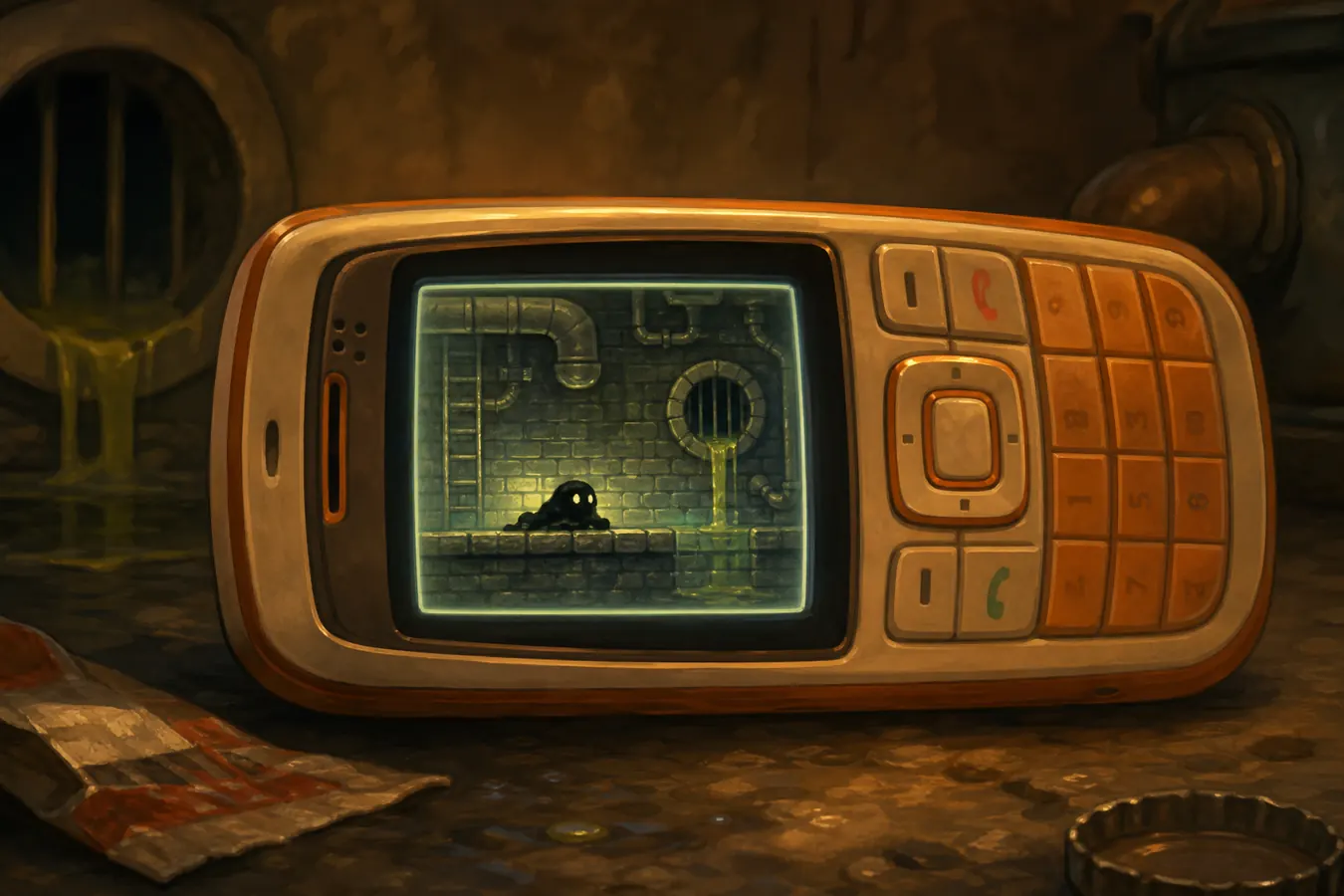
J2ME titles shipped as .jar packages, often paired with a descriptor file, and were built for specific screen sizes. Catalog entries for Gish Mobile list builds around 128×160 and 240×320, including handsets such as Sony Ericsson models and S60 devices. File sizes in the ballpark of a few hundred kilobytes were normal—tiny by modern APK standards, huge as a design constraint.
Controls relied on numeric pads and soft keys, not multitouch. That forced designers to simplify the sticky / slick / solid fantasy into inputs a thumb could manage on a bus ride. The result was never a pixel-perfect PC clone; it was a translation that kept the tar hero’s identity alive on hardware with megabytes to spare.
Distribution ran through portals and operator channels more than a single global store. Players discovered games by browsing carrier menus, WAP decks, or specialist Java sites. That ecosystem is why archival pages still surface Gish jars years later—and why this fan site refuses to host them. Copyright still matters, even when the phones are museum pieces.
Why the port mattered
Gish had already won the Seumas McNally Grand Prize and Innovation in Game Design at IGF 2005. Bringing that pedigree to mobile signaled that indie PC hits could travel. For GlobalFun and Pixalon, the license offered prestige. For fans stuck without a laptop, it offered a pocket-sized taste of Dross.
The Java edition also bridges into later smartphone efforts. When Android matured, Gish Reloaded continued the mobile conversation with better screens and touch. That chapter—and its eventual Play Store disappearance—is covered on the Android page. The iOS page explains the missing Apple counterpart.
Playing Java Gish today
Genuine J2ME hardware is scarce. Emulators on modern phones can run old jars, but obtaining files legally is the hard part. This guide will not supply downloads. If you own an original handset package or a jar you acquired legitimately years ago, emulation is a personal archival choice. Everyone else should treat Java Gish as history and play the PC edition instead.
To understand the systems the mobile teams were compressing, read the gameplay breakdown. For the studio path from Chronic Logic to open source, open the history essay. The tar blob’s PC life is still the richest way in.
Java facts at a glance
- Platform: Java ME / J2ME feature phones
- Developers: Hardwire and Erphenic Studios
- Publisher / distribution: Pixalon Studios; GlobalFun exclusive distribution
- Launch window: Announced for mid Q1 2009 globally
- Resolutions: Common builds around 128×160 and 240×320
- Role today: Archival mobile milestone, not a supported store product
Culture of the JAR years
Java game culture had its own celebrities, pirate channels, and carrier gatekeepers. An IGF winner arriving in that space was unusual. Most deck fillers were endless runners, soccer managers, or movie tie-ins. Gish brought underground humor and physics branding into a market that often rewarded only the broadest hooks.
That mismatch is part of the charm. Imagine discovering a tar blob rescue story between prepaid top-up screens. For some players, the mobile edition was their only Gish. For PC fans, it was a curiosity. For historians now, it is evidence that indie prestige titles experimented with phones earlier than the App Store myth suggests.
When you compare Java with later Android Reloaded builds, notice the continuity of partners and the jump in fidelity. Then compare both with the iOS gap. The pattern is uneven geographic and platform coverage—not a single clean “mobile version” that covers every store forever.
If you are documenting your own collection, record screen size, jar filename, and source. Vague screenshots labeled “Gish Java” are easy to misdate. Precision keeps fan archives useful. Pair that habit with our studio history so technical details sit beside people and dates.
Feature phones are gone. The story of how Gish got onto them still belongs in the indie record—and on this site’s map of every tunnel the blob crawled through. From here, return home or jump into gameplay to remember what all those kilobytes were trying to approximate.
One more practical note: do not confuse “Java” in the Gish Mobile sense with desktop Java game frameworks or Android’s distant lineage jokes. Here, Java means J2ME midlets on feature phones—a specific stack with specific screen profiles. Naming it precisely keeps searchers from installing the wrong runtime and wondering why nothing sticky happens.
Preserving J2ME culture means preserving context: prepaid phones, carrier billing, tiny heaps of RAM, and art pipelines that dithered everything. Gish Mobile is a case study inside that culture, not a novelty GIF. When you write about it, name the companies and the launch window so the entry stays useful.
Then close the laptop and boot the PC campaign. The JAR was an invitation. The desktop sewers are still the main event, sticky ceiling and all.