
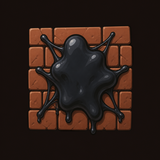
Sticky
Climb walls, cling to ceilings, and plant yourself on crates or ropes. Use stickiness to carry objects, then change state to throw or drop them with intent.
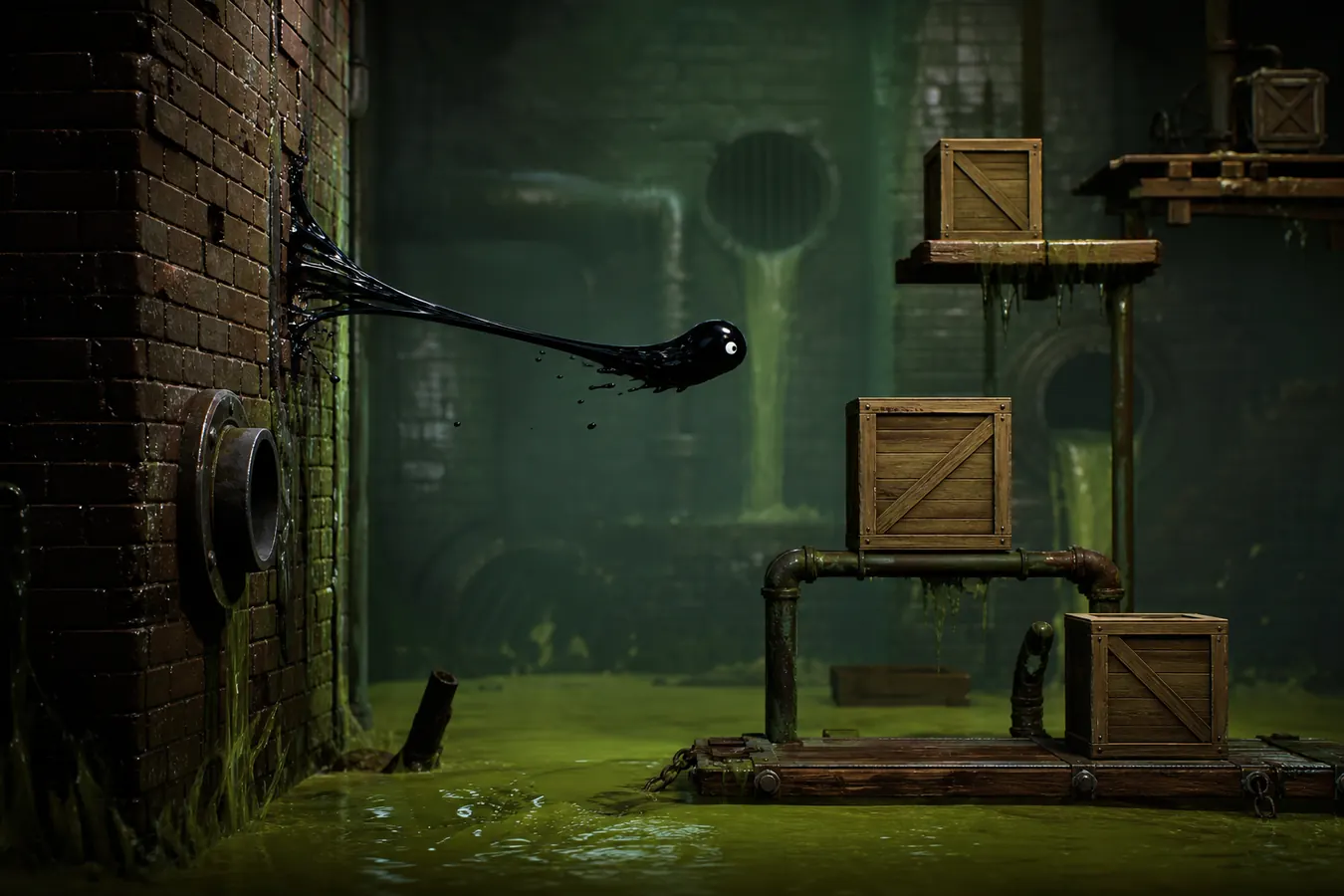
Master the four states, then combine them until the sewers of Dross start cooperating.
Gish looks like a side-scroller and plays like a physics toy. Arrow keys accelerate left and right or stretch and shrink the blob. Jumping is not a one-tap leap. You compress, then expand, building bounce the way a living spring would. That rhythm is the first skill every new player must learn.
Beyond movement, four abilities define the campaign. They can stack. Sticky plus slick lets you climb without snagging every loose prop. Slick plus solid turns downhill runs into high-speed slams. The game constantly asks which property of tar solves the room in front of you.
Climb walls, cling to ceilings, and plant yourself on crates or ropes. Use stickiness to carry objects, then change state to throw or drop them with intent.
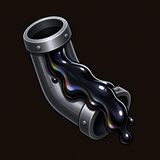
Remove friction. Slide through pipes, squeeze out of crushers, and slip under barriers. Slick is survival when the world tries to pin you in place.
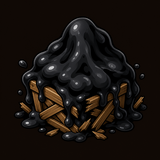
Become rigid weight. Smash breakable platforms, squash enemies, sink in water, resist being run over, and push what you previously slipped under.

Compress, then expand to launch. Chain bounces for height. Combine with slick for wild arcs or sticky for controlled wall approaches.
Story is the linear campaign through Dross. Levels remix platforming, light combat, and physics puzzles—slam a beam to swing a rope, or go heavy after sliding under a block so you can heave it aside. Collection reframes exploration as a timed challenge for players who want mastery. Vs. drops two Gish characters into competitive chaos, proving the soft body works as a local multiplayer toy.
Gish lives happily with Brea until a mysterious creature kidnaps her. The chase leads through sewer corridors filled with odd enemies and traps. The final confrontation involves Hera, whose unrequited affection turns violent. After that fight, the last rescue still matters: success and failure produce different endings, one bright and absurd, one bleakly funny.
The writing keeps the tone closer to dark cartoon than epic fantasy. You are not a knight. You are tar with a grudge and a girlfriend. That framing makes every physics death feel like slapstick instead of solemn failure—until a tough room demands real precision.
Strong Gish levels telegraph their solution without spelling it out. A hanging rope suggests stickiness. A narrow gap under a crate suggests slick entry before a solid lift. A wooden bridge over spikes invites a heavy slam. Train yourself to scan for materials first, enemies second. Combat is often just applied mass.
When you die, ask which property you forgot. Many failures come from staying sticky too long and collecting debris, or staying solid in a space that needed a liquid slip. The game is fairer than it feels in the first hour. Your mental model simply has not caught up to the tar yet.
Collection mode is excellent homework after Story. Time pressure forces cleaner state changes. Vs. mode, meanwhile, teaches spacing and prediction: another blob with the same rules is a chaotic mirror. Even if you mainly care about the campaign, a few multiplayer rounds sharpen instincts you will use against Hera’s gauntlet.
Accessibility tip: play seated with a keyboard you trust. Gish rewards deliberate presses more than twitch. If you are coming from modern precision platformers, slow down. If you are coming from puzzle games, remember that momentum is part of the solution space, not noise around it.
Want the studio story behind these systems? Read the history page. Curious how the same ideas traveled to phones? See Java, Android, and iOS. For a wider tour of why the game still matters, return to the Gish Game home.
Master the body, and Dross becomes a playground. Ignore the body, and every pipe is a punchline at your expense. That is the deal the sewers offer—and the reason the gameplay still feels singular.
Final drill: pick one early Story stage and complete it three times—once favoring sticky routes, once favoring slick routes, once forcing solid solutions wherever possible. You will finish with a personal atlas of options the game quietly supports. That atlas is the real walkthrough, and it travels with you longer than any spoiler list.
Speedrunners and challenge players will invent constraints the designers never listed: sticky-only runs, no-solid runs, pacifist interpretations of rooms that seem to demand crushing. The engine is expressive enough to support those house rules. Share clips with ability callouts so viewers learn the language of tar, not only the punchline of a fall.
When a puzzle finally clicks, pause for a second. Notice which state change unlocked it. That reflective habit turns Gish from a curiosity into a teacher—and it is the fastest way to stop blaming the controls for what is actually a materials problem.