
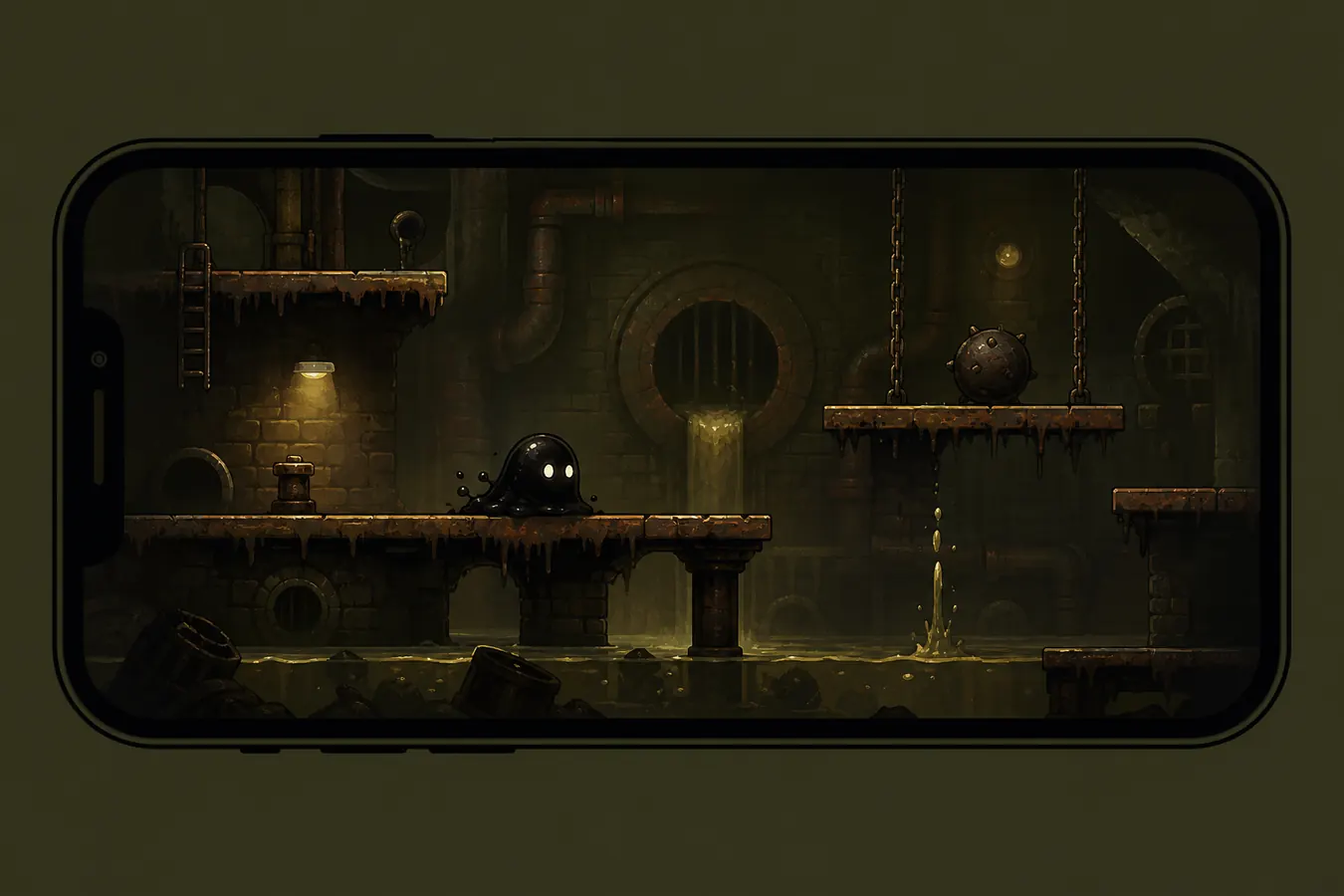
When smartphones overtook feature phones, Gish followed. The Android chapter is best known as Gish Reloaded, associated with publisher HandyGames. Listings from the early 2010s describe a free or free-with-ads package that brought the gloomy underground adventure to phones running Android 1.6 and up. Players could explore physics puzzles, download custom levels in later builds, and even dabble in deathmatch on shared maps.
This page is part of the Gish Game fan guide. It explains what shipped, what vanished, and how Android fits between the earlier Java Mobile port and today’s PC-first reality. It is not an APK mirror.
What Reloaded tried to deliver
Marketing copy from the period framed Reloaded as the underground platform adventure in your pocket: sticky traversal, environmental puzzles, and the same dark humor that defined the PC original. Update notes mentioned multi-touch support on Android 2.0+, sleep-mode controls, redraw-rate options, and filesystem map loading. Those details matter because they show the team treated Android as a living port, not a one-and-done JAR conversion.
In spirit, Reloaded continued the mobile lineage announced years earlier for J2ME. The feature-phone game from Hardwire, Erphenic, Pixalon, and GlobalFun proved the brand could shrink. Android offered better controls and screens for the physics fantasy—especially once capacitive multitouch became common.
Why you may not find it on Google Play
Catalog trackers report that free Reloaded builds disappeared from Google Play around November 2012. Store removals happen for many reasons: licensing, maintenance cost, SDK obsolescence, or publisher catalog cleanup. Whatever the cause, the practical result is the same for most players today: there is no reliable official Play Store listing to recommend as a primary install path.
Because this site is an information guide, we will not link to random APK warehouses. Sideloading abandoned games carries security and legal risks. If you still have Reloaded installed from years ago, treat it as a personal archive. If you do not, plan on PC instead of chasing shady files.
Better ways to play the classic now
The fullest Gish experience remains on Windows, macOS, and Linux. Digital storefronts such as Steam have carried the title for years. The May 2010 open-source release under GPL also enabled community maintenance and forks for modern machines. That path preserves the original physics feel more faithfully than an abandoned smartphone build.
If you are researching mobile history rather than hunting an install, continue with the Java page for the 2009 feature-phone launch and the iOS page for why Apple’s storefront never became a lasting home for the original game. The gameplay guide explains the abilities Reloaded tried to translate to touch.
Android takeaways
- Gish Reloaded was a real early-2010s Android release from the HandyGames era.
- Later updates experimented with multitouch, performance options, and user maps.
- Official Play availability ended years ago; do not expect a current store page.
- PC and open-source legacy are the honest recommendations for new players.
- Android sits between J2ME history and today’s absence of a first-party mobile client.
Touch controls versus tar physics
Even when Reloaded was available, translating compression jumps and multi-state toggles to touchscreens was a design challenge. Virtual buttons compete with the playfield. Multitouch helped later builds, but the PC keyboard mapping remains the clearest expression of the fantasy. That is another reason this guide steers new players toward desktop first.
If you are a historian of mobile indie ports, Reloaded still deserves a footnote. It shows a mid-tier publisher betting on a cult PC property during Android’s chaotic growth years. It also shows how quickly that bet can vanish from store shelves when maintenance no longer pays. Compare that arc with the Java launch documented on our Java page—different tech, same lesson about fragile distribution.
Readers comparing phone platforms should also skim the iOS reality check. Android at least had a named Reloaded product with public update notes. iOS lacks that confirmed modern foothold for the original game. Keeping those facts separate prevents the usual internet mash-up where “it was on mobile” becomes “it is on my App Store today.”
For the studio timeline that led to these ports, visit Gish history. For how the abilities were meant to feel before any touch layer existed, study gameplay. The tar still drips—just not always through Google’s pipes.
Return to the homepage whenever you need the full map of tunnels. Android is one corridor, important and incomplete, marked clearly so you do not walk into a dead store link expecting a boss fight.
Collectors sometimes ask whether Reloaded free and paid SKUs differed beyond ads. Public notes emphasize feature parity evolving over patches more than a radically different campaign. Treat version numbers on old APKs as archaeology: interesting if you already own them, irrelevant if you are choosing how to play tonight. Tonight’s answer is still the PC build, the open-source lineage, and a keyboard ready for compression jumps.
Community memory sometimes inflates Reloaded into a perfect phone remake. Treat those claims carefully. Performance varied by device generation, and custom map features were advanced for their day but not a substitute for the full PC toolkit. Enjoy the history. Play the definitive edition where the physics were born.
If you maintain a personal museum of early Android indies, label Reloaded with approximate years, publisher name, and delisting context. Future researchers will thank you for not collapsing it into a generic “Gish mobile” folder beside unrelated jars.